In This Article
- Medicare Decisions Are Too Important to Rush
- What Medicare Self-Enrollment Means
- The Rise of the “No Pressure” Medicare Shopper
- Why “$0 Premium” Does Not Mean “$0 Cost”
- Why Doctor Networks Matter
- Why Prescription Drugs Must Be Checked Every Year
- Self-Enrollment Does Not Mean No Help
- Who Benefits Most From Medicare Self-Enrollment?
- The Best Medicare Decision Is an Informed One
- Medicare SelfEnroll.com Is About Confidence, Not Pressure
- Final Thoughts
- What is Medicare self-enrollment?
- Does self-enrollment mean I cannot get help?
- Is MedicareSelfEnroll.com Medicare.gov?
- Why should I compare Medicare plans before enrolling?
- Is a $0 premium Medicare Advantage plan really free?
- Should I check my doctors before enrolling?
- Should I check my prescriptions before enrolling?
- Who is self-enrollment best for?
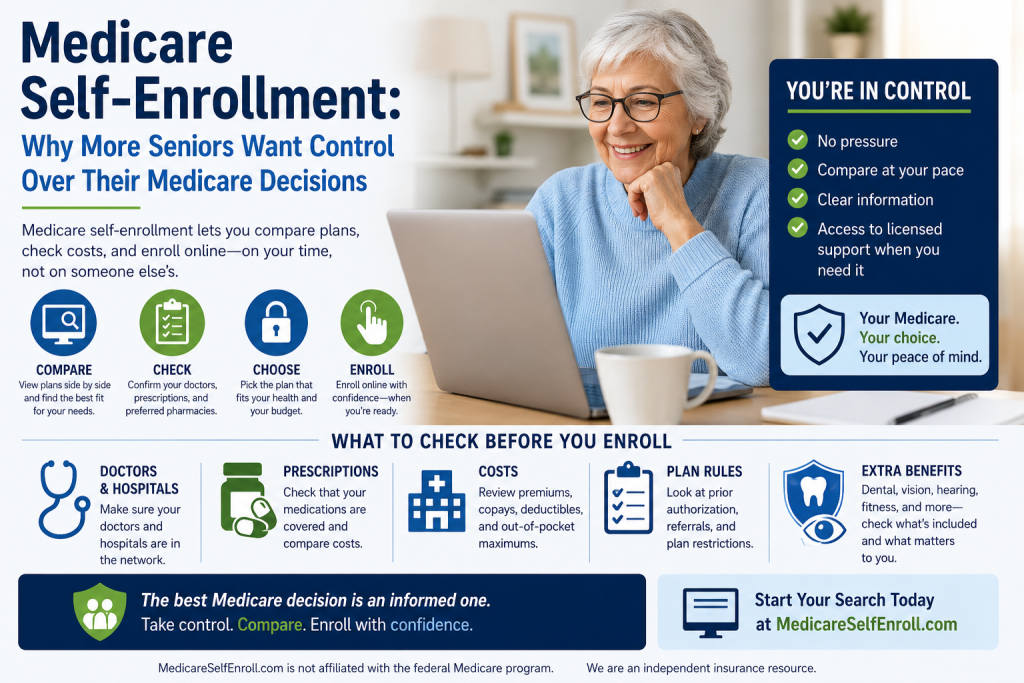
Choosing a Medicare plan should not feel like being trapped in a phone call with someone who drank three cups of coffee and memorized a sales script.
Yet many seniors feel exactly that way.
They want Medicare information.
They want plan choices.
They want time to think.
They want to compare options without pressure.
That is where Medicare self-enrollment comes in.
Self-enrollment allows seniors to review Medicare plan options online, compare important details, and enroll when they are ready. It does not mean you are alone. It means you are in control.
And for many people, that is the way Medicare should have worked all along.
Medicare Decisions Are Too Important to Rush
Medicare is not just another bill. It affects your doctors, prescriptions, hospitals, budget, and peace of mind.
That is why rushing into a plan can cause problems.
A plan may look attractive because of a low monthly premium, dental benefits, hearing benefits, or other extras. But seniors need to look deeper.
Before enrolling, you should check:
Can I keep my doctors?
Are my prescriptions covered?
What will I pay at my pharmacy?
Are my preferred hospitals included?
What are the copays?
Is prior authorization required?
What is the maximum out-of-pocket limit?
Medicare.gov encourages people to compare health and drug plans based on coverage, costs, and provider access. The official Medicare site also gives beneficiaries tools to review available plan options.
The point is simple: Medicare decisions should be made with clear information, not pressure.
What Medicare Self-Enrollment Means
Medicare self-enrollment means you can use an online platform to compare Medicare plan options and enroll yourself.
Instead of waiting for someone to call you, you start the process when you are ready.
Instead of being rushed through a conversation, you can review the information at your own pace.
Instead of relying only on someone else’s explanation, you can look at plan details yourself.
That matters.
Many seniors are perfectly capable of making informed decisions when the information is presented clearly. The problem is not that seniors cannot understand Medicare. The problem is that Medicare is often explained badly.
Self-enrollment puts the steering wheel back in your hands.
The Rise of the “No Pressure” Medicare Shopper
Today’s seniors are more comfortable online than many people assume.
They shop online.
They bank online.
They read news online.
They use video calls.
They text the grandchildren, sometimes with emojis nobody asked for.
So why should Medicare still feel like an old-fashioned sales appointment?
Many seniors now want a quieter, clearer way to review their options. They do not want someone pushing them toward a plan before they understand the details.
They want to compare first.
That is a healthy instinct.
Medicare Advantage and Part D options can vary by location, plan type, provider network, drug coverage, and cost. CMS reported that for 2026, all people with Medicare have access to Medicare Advantage plans, and many have access to $0 premium Medicare Advantage options, but plan availability and benefits still vary by area.
In plain English: choices are available, but the right choice depends on where you live and what you need.

Why “$0 Premium” Does Not Mean “$0 Cost”
This is one of the biggest Medicare misunderstandings.
A Medicare Advantage plan may have a $0 monthly premium. That can be helpful. But it does not mean all medical care is free.
You may still have copays.
You may still have coinsurance.
You may still pay for prescriptions.
You may still need prior authorization.
You may still face network rules.
You may still have an annual maximum out-of-pocket limit.
A $0 premium can be a good feature, but it is not the whole story.
That is like seeing a restaurant sign that says “free bread” and assuming the steak is included. Nice try, but no.
Self-enrollment gives you the chance to look past the headline and review the full plan.
Why Doctor Networks Matter
For many seniors, the most important question is not “What extras does this plan offer?”
The real question is:
Can I keep my doctor?
Doctor access matters. Hospital access matters. Specialist access matters.
A plan may offer attractive benefits, but if your doctor or preferred hospital is not in the network, that plan may not fit your life.
This is especially important for people with ongoing health conditions, such as diabetes, heart disease, arthritis, cancer history, COPD, kidney disease, or neurological conditions.
When comparing Medicare plans, doctor access should be near the top of the list.
Not at the bottom.
Not after the dental benefit.
Not after the TV commercial promise.
Near the top.
Why Prescription Drugs Must Be Checked Every Year
Prescription drug coverage can change.
Your plan’s formulary can change.
Your drug tier can change.
Your pharmacy pricing can change.
Prior authorization rules can change.
Step therapy rules can change.
That means you should review your medications before enrolling in or keeping a plan.
Medicare Part D remains an important part of Medicare planning, whether you use a stand-alone Part D drug plan with Original Medicare or drug coverage included in a Medicare Advantage plan. CMS has reported that all individuals with Medicare have access to a Medicare prescription drug plan in 2026.
But access to a drug plan is not the same thing as knowing your specific prescriptions are covered affordably.
That is why seniors should check their medications carefully before enrolling.
Self-Enrollment Does Not Mean No Help
This is important.
Self-enrollment does not mean you are abandoned in the Medicare wilderness with a flashlight and a sandwich.
A good self-enrollment platform should still provide access to information, plan comparison tools, and licensed support when needed.
The difference is control.
You can review first.
You can compare first.
You can ask questions when you want help.
You can enroll when you feel ready.
That is very different from being pushed into a decision because someone on the phone says, “This is the best plan for you.”
Maybe it is. Maybe it is not.
The plan should prove itself on the details.

Who Benefits Most From Medicare Self-Enrollment?
Medicare self-enrollment may be especially helpful for people who:
Want to compare plans without pressure
Prefer to review information privately
Do not like sales calls
Want to involve family members in the decision
Are comfortable using online tools
Want to check doctors and prescriptions carefully
Need time to think before enrolling
Want a clear record of what they reviewed
It is also helpful for adult children who assist parents with Medicare decisions. A daughter or son can sit with a parent, review the choices, check medications, and help compare costs.
That is much better than Mom answering a random phone call and enrolling because someone promised “extra benefits.”
The Best Medicare Decision Is an Informed One
There is no single best Medicare plan for everyone.
The best plan is the one that fits your doctors, medications, health needs, budget, and location.
For some people, that may be Medicare Advantage.
For others, it may be Original Medicare with a Medicare Supplement and Part D plan.
For some, the lowest premium matters most.
For others, provider flexibility matters more.
There is no shame in choosing either path. The mistake is choosing without understanding the tradeoffs.
That is where self-enrollment can help.
It gives seniors the ability to slow down, compare, and decide with their eyes open.
Medicare SelfEnroll.com Is About Confidence, Not Pressure
MedicareSelfEnroll.com is designed for people who want to explore Medicare options without feeling pushed, rushed, or confused.
The goal is simple:
Help seniors compare.
Help seniors understand.
Help seniors enroll with confidence.
MedicareSelfEnroll.com is not affiliated with the federal Medicare program. It is an independent insurance resource designed to help people review Medicare plan options and make more informed decisions.
Because Medicare should not feel like a sales contest.
It should feel like a decision you understand.
Final Thoughts
Medicare self-enrollment is not about doing everything alone.
It is about having control.
It is about reviewing your choices at your own pace.
It is about checking your doctors and prescriptions.
It is about understanding costs before you enroll.
It is about asking questions when you need help.
It is about making a decision without pressure.
That is how Medicare should feel.
Calm. Clear. Respectful.
And maybe just a little less like trying to read the fine print on a medicine bottle without your glasses.

FAQ
What is Medicare self-enrollment?
Medicare self-enrollment allows you to compare Medicare plan options online and enroll when you are ready. It gives seniors more control over the process.
Does self-enrollment mean I cannot get help?
No. Self-enrollment does not mean no help. You can still use comparison tools, review information, and ask for licensed support when needed.
Is MedicareSelfEnroll.com Medicare.gov?
No. MedicareSelfEnroll.com is not affiliated with the federal Medicare program. Medicare.gov is the official U.S. government Medicare website. MedicareSelfEnroll.com is an independent insurance resource.
Why should I compare Medicare plans before enrolling?
Medicare plans can differ by premiums, copays, provider networks, drug coverage, pharmacy pricing, prior authorization rules, and out-of-pocket limits.
Is a $0 premium Medicare Advantage plan really free?
Not completely. A $0 premium means you may not pay an additional monthly plan premium, but you may still have copays, coinsurance, prescription costs, and other out-of-pocket expenses.
Should I check my doctors before enrolling?
Yes. Always check whether your doctors, specialists, hospitals, and medical groups are included in the plan’s network.
Should I check my prescriptions before enrolling?
Yes. Prescription drug coverage can vary by plan. You should check whether your medications are covered, what tier they are on, and what they may cost at your pharmacy.
Who is self-enrollment best for?
Self-enrollment is useful for seniors who want to compare plans privately, avoid sales pressure, involve family, and make a decision at their own pace.
Read Other Blog:- Read Now

William Vargas brings over 50 years of financial and insurance expertise to every Medicare conversation. He operates MedicareSelfEnroll.com, helping seniors in Florida, New York, and North Carolina — with no pressure, no phone calls required.