In This Article
- What Is Regenerative Medicine?
- Why This Matters So Much for Older Adults
- The Difference Between Hype and Hope
- Stem Cells: The Famous Part of Regenerative Medicine
- Regenerative Medicine and the Heart
- Regenerative Medicine and the Brain
- Regenerative Medicine and Joints
- Regenerative Medicine and Skin
- Gene Therapy: Repairing the Instructions
- Cell Therapy and Cancer
- Tissue Engineering: Building Replacement Parts
- Regenerative Medicine and Diabetes
- Regenerative Medicine and Vision
- Regenerative Medicine and Wound Healing
- The Dark Side: Unproven Stem Cell Clinics
- Questions Seniors Should Ask Before Any Regenerative Treatment
- Clinical Trials: Where Hope Should Be Tested
- Why Regenerative Medicine Fits the Elderhood Message
- What Regenerative Medicine Can Already Do
- What Regenerative Medicine May Do in the Future
- The Cost Problem
- The Ethical Questions
- What Seniors Can Do Now
- The Boring But Effective Plan
- Final Takeaway: The Future Is Not About Living Forever
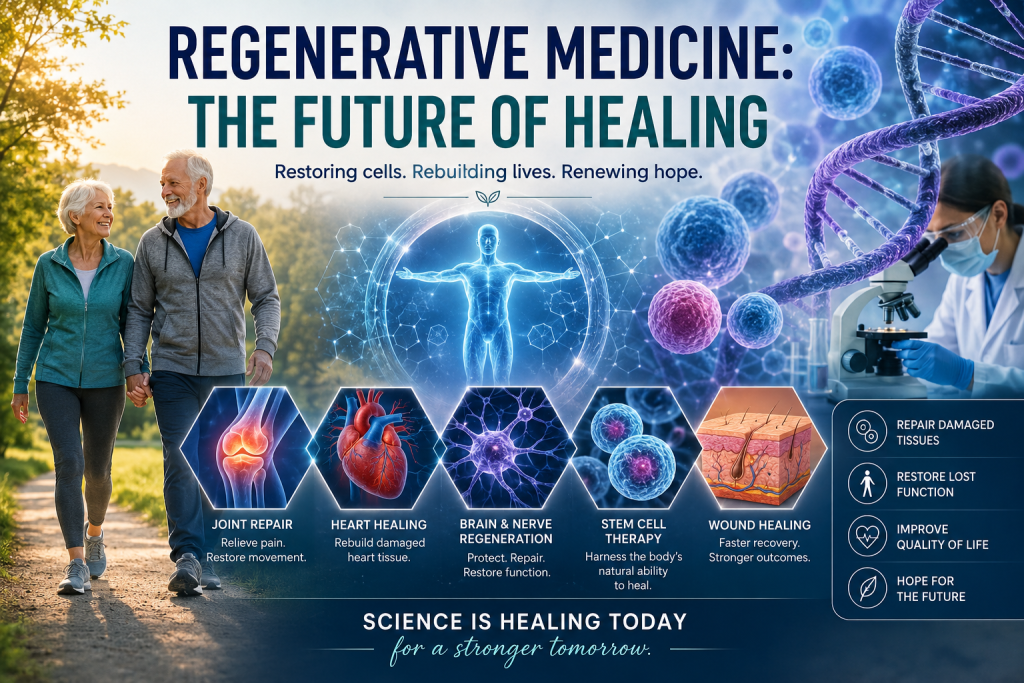
There was a time when medicine mostly worked like a repair shop.
Something broke, and the doctor tried to patch it. A joint wore out, and maybe one day it was replaced. A heart valve failed, and surgeons installed a new one. A disease damaged tissue, and the goal was often to manage the decline.
That kind of medicine saved millions of lives, and we should never take it for granted. But modern science is beginning to ask a much bigger question:
What if the future of medicine is not just repair, but regeneration?
That is the promise of regenerative medicine.
It is not science fiction anymore. It is not a magic fountain of youth. And it is certainly not something people should chase blindly from every clinic with a glossy brochure and a big invoice.
But it is real. It is advancing. And for people in Elderhood, it may become one of the most important medical frontiers of the next generation.
The larger truth of aging is adaptation. For most of human history, we adapted to decline. We accepted that damaged cartilage stayed damaged, nerves did not easily recover, heart tissue did not grow back, and the brain had very limited ability to heal. But regenerative medicine is challenging some of those old assumptions.
The idea is simple, but powerful: help the body repair, replace, rebuild, or regenerate damaged cells, tissues, and organs.
That is a very different way of thinking.
Traditional medicine often asks, “How do we control the symptoms?”
Regenerative medicine asks, “Can we help restore function?”
And that one question could change the future of aging.
What Is Regenerative Medicine?
Regenerative medicine is a field focused on repairing, replacing, engineering, or regenerating damaged cells, tissues, or organs so the body can regain lost function. The FDA’s regenerative medicine advanced therapy framework includes cell therapies, tissue-engineered products, human cell and tissue products, and certain related combination products intended for serious or life-threatening diseases when early clinical evidence suggests potential benefit.
That sounds technical, so let’s put it in plain English.
Regenerative medicine is the science of helping the body rebuild.
Sometimes that may involve stem cells. Sometimes it may involve gene therapy. Sometimes it may involve tissue engineering, lab-grown cells, biologic scaffolds, platelet-rich plasma, or advanced wound healing. Sometimes it may involve stimulating the body’s own repair systems instead of putting something foreign into the body.
This field includes several major areas:
Stem cell therapy.
Gene therapy.
Tissue engineering.
Platelet-rich plasma and other biologic treatments.
Lab-grown tissues.
Cell-based cancer treatments.
Cartilage and joint repair.
Heart, nerve, skin, and organ regeneration research.
Advanced wound healing.
Immune system reprogramming.
That is why regenerative medicine is not one treatment. It is a whole new way of approaching disease and injury.
It is not “take this pill and grow a new knee.” If only it were that easy. If growing new cartilage were as simple as watering a tomato plant, every orthopedic surgeon would be out of business by Tuesday.
But the direction is clear. Medicine is moving from managing damage toward repairing damage.
Why This Matters So Much for Older Adults
People in Elderhood should pay attention to regenerative medicine for one simple reason:
Aging is often the accumulation of damage.
Cartilage wears down. Muscles shrink. Bones weaken. Skin thins. Blood vessels stiffen. Nerves lose function. The immune system becomes less coordinated. The brain becomes more vulnerable to inflammation, vascular problems, and disease. Wounds heal more slowly.
Most of this does not happen overnight. Aging is not a light switch. It is more like a house slowly needing repairs.
First, the roof leaks a little. Then a window sticks. Then the stairs creak. Then one day you realize the whole place needs maintenance.
The body is similar.
Modern medicine has gotten very good at keeping the house standing. Blood pressure medicine, antibiotics, insulin, statins, joint replacements, pacemakers, cataract surgery, cancer treatments, and vaccines have changed aging dramatically.
But regenerative medicine may eventually help with the next step: restoring function, not just slowing decline.
That is why this field matters so much.
Not because it will make people 25 again.
That is the carnival barker version.
The real promise is better:
More years with mobility.
More years with independence.
More years with vision.
More years with healing.
More years with strength.
More years with a life worth living.
That is the Elderhood meaning of regenerative medicine.
The Difference Between Hype and Hope
We have to be careful here.
Regenerative medicine is full of hope, but it is also full of hype. And seniors are often targeted by clinics selling expensive treatments that sound scientific but may not be proven.
The FDA lists many approved cellular and gene therapy products, including therapies for certain cancers, rare genetic diseases, burns, blood disorders, and other serious conditions. That means regenerative medicine is already part of legitimate medicine in specific areas.
But that does not mean every “stem cell clinic” offering treatment for arthritis, dementia, back pain, neuropathy, or aging is offering something proven.
That distinction matters.
There is a world of difference between:
A regulated therapy approved for a specific disease after clinical testing.
And a private clinic selling “stem cells” for vague anti-aging promises.
One is medicine.
The other may be marketing wearing a lab coat.
Mayo Clinic has warned about the need to separate realistic regenerative medicine from hype, especially in orthopedic conditions where patients may be vulnerable to big promises. Mayo describes regenerative medicine as creating living, functional tissues to repair or replace tissue or organ function lost due to age, disease, damage, or congenital defects, while also stressing realistic expectations.
That is the tone we need: hopeful, but not gullible.
A healthy senior should be optimistic.
A smart senior should also ask questions.
Stem Cells: The Famous Part of Regenerative Medicine
When most people hear “regenerative medicine,” they think of stem cells.
Stem cells are special because they can renew themselves and, depending on the type, become different kinds of cells. NIH explains that pluripotent stem cells can develop into all cell types of the adult body, while adult stem cells usually generate the specialized cell types of the tissue or organ where they are found.
Think of stem cells as the body’s “starter cells.”
Not exactly blank checks, but more like biological apprentices. Under the right conditions, they can become more specialized.
There are several types:
Adult stem cells are found in tissues such as bone marrow, fat, blood, skin, and other organs. They help maintain and repair tissues.
Embryonic stem cells can become almost any cell type, but they raise ethical and regulatory issues.
Induced pluripotent stem cells, often called iPS cells, are adult cells that scientists reprogram in the lab so they behave more like embryonic stem cells.
That last category, iPS cells, is one of the most exciting areas in medicine. It means scientists may be able to take mature cells, reset them, and guide them into becoming heart cells, nerve cells, pancreatic cells, or other needed cell types.
In 2026, Japan granted conditional, time-limited approvals for two iPS-cell-derived regenerative products: one using heart muscle cell sheets for severe ischemic cardiomyopathy, and another using dopamine-producing precursor cells for Parkinson’s disease. These approvals still require ongoing safety and efficacy monitoring, but they represent a major milestone in moving iPS-cell therapy toward real-world medicine.
That is not hype. That is a real step forward.
But again, it is not a miracle cure. Even Shinya Yamanaka, whose work helped launch iPS cell science, has emphasized steady progress with scientific caution.
That is exactly the right attitude.
Walk forward.
Do not run into traffic.
Regenerative Medicine and the Heart
The heart has always been one of the biggest challenges in medicine.
When heart muscle is damaged, such as after a heart attack, the body does not easily grow back strong new heart tissue. Scar tissue can form, and the heart may become weaker.
That is why regenerative heart medicine is such a major field.
Researchers are studying whether lab-grown heart cells, cell sheets, gene therapies, biologic signals, and tissue engineering can help repair damaged heart tissue or improve function.
This does not mean someone will soon walk into a clinic with heart failure and walk out with a brand-new heart. We are not there.
But the idea that scientists are now testing ways to restore heart function instead of only managing decline is enormous.
For seniors, this is especially meaningful because heart disease remains one of the major threats to independence and longevity.
The future may include therapies that help damaged heart tissue recover more function after injury. That would be a profound change.
Today, the message is still practical:
Control blood pressure.
Move your body.
Eat real food.
Do not smoke.
Manage diabetes.
Treat sleep apnea.
Take medications properly.
Get regular care.
Why? Because regenerative medicine is coming, but you still need to keep the house standing until the repair crew arrives.
Regenerative Medicine and the Brain
The brain is the holy grail.
For decades, people were taught that brain damage was mostly permanent. Stroke, Parkinson’s disease, Alzheimer’s disease, traumatic brain injury, and spinal cord injury all seemed to represent damage that medicine could only partly manage.
Now that assumption is being challenged.
Scientists are studying ways to replace damaged neurons, protect existing brain cells, reduce inflammation, restore dopamine-producing cells, repair spinal cord injury, and use gene therapy for neurological disease.
The 2026 Japanese conditional approval of an iPS-cell-derived therapy for Parkinson’s disease is especially important because Parkinson’s involves the loss of dopamine-producing neurons. The approved product is designed to transplant precursor dopamine-producing neurons into the brain for patients whose symptoms are not responding adequately to conventional therapy.
That is a major scientific milestone.
But let’s be clear. Parkinson’s disease is complicated. Alzheimer’s disease is complicated. Stroke recovery is complicated. The brain is not a toaster where you remove one burnt wire and pop in a new one.
The brain is more like an orchestra. If the violin section is missing, you cannot just throw new violinists on stage and expect Beethoven by dinner.
They have to connect. They have to communicate. They have to work with the rest of the system.
That is why brain regeneration is so difficult.
But it is no longer foolish to imagine progress.
This is why Elderhood should not be built around resignation. It should be built around preparation.
Stay healthy enough to benefit from what is coming.
That is the practical wisdom.
Regenerative Medicine and Joints
This is where many seniors pay attention immediately.
Knees. Hips. Shoulders. Back pain. Arthritis. Cartilage loss.
Nothing gets your attention faster than a knee that sounds like a bowl of Rice Krispies every time you stand up.
Joint repair is one of the most visible areas of regenerative medicine, but it is also one of the most confusing.
Some legitimate procedures already exist. For example, MACI, an FDA-listed product, uses a patient’s own cultured cartilage cells on a collagen membrane for certain cartilage defects.
Platelet-rich plasma, or PRP, is also used in some sports medicine and orthopedic settings, although the evidence varies by condition, preparation method, and patient selection. Mayo Clinic Sports Medicine describes regenerative procedures as minimally invasive, ultrasound-guided outpatient procedures used for various musculoskeletal injuries and conditions.
But this is also where the marketing can get slippery.
Many clinics advertise stem cell injections for arthritis as if they can regrow a worn-out knee. That is where people need to slow down.
A knee with mild injury is not the same as a knee with severe bone-on-bone arthritis.
A tendon injury is not the same as a destroyed joint.
A research protocol is not the same as a proven treatment.
And a testimonial from someone named “Bob” who says he danced at his granddaughter’s wedding after one injection is not the same as a well-designed clinical trial.
Testimonials are emotional.
Evidence is harder.
For seniors considering regenerative orthopedic treatments, the questions are simple:
Is this FDA-approved for my specific condition?
Is it part of a clinical trial?
What evidence supports it?
What are the risks?
What is the total cost?
Will Medicare cover it?
What happens if it fails?
What are my alternatives?
Could delaying surgery make my condition worse?
That last question matters. Sometimes chasing an unproven treatment can waste money. Sometimes it can also waste time.
Hope is good.
Delay can be dangerous.
Regenerative Medicine and Skin
Skin is one of the most natural areas for regeneration because the skin already renews itself.
But aging skin becomes thinner, drier, slower to heal, and more vulnerable to injury. For seniors, this is not just cosmetic. Skin health affects wound healing, infection risk, comfort, mobility, and quality of life.
Regenerative approaches in skin care and wound repair include cultured skin cells, tissue-engineered skin substitutes, growth factors, platelet-derived products, scaffolds, and advanced wound dressings.
Some FDA-listed regenerative products involve cultured skin cells and tissue-engineered skin products. For example, the FDA’s approved cellular and gene therapy list includes products such as GINTUIT and STRATAGRAFT, which involve cultured cells used in specific medical contexts.
This is an area where regenerative medicine is already practical in certain settings, especially burns, wounds, and tissue repair.
But there is also a booming cosmetic market using words like “stem cells,” “exosomes,” “growth factors,” and “regenerative skincare.”
Some of this may have promise.
Some of it may just be expensive lotion with a PhD vocabulary.
For ordinary skin health in Elderhood, the basics still matter:
Hydration.
Protein.
Vitamin and mineral sufficiency.
Blood sugar control.
Sun protection.
Gentle cleansing.
Moisturizing.
Treating wounds early.
Checking skin changes.
Managing circulation.
Not smoking.
The future of skin regeneration is exciting, but do not ignore the boring basics. Boring basics are often what keep you out of trouble.
Gene Therapy: Repairing the Instructions
If stem cells are about cells, gene therapy is about instructions.
Many diseases happen because a gene is missing, damaged, mutated, or not functioning properly. Gene therapy tries to correct, replace, silence, or modify genetic instructions so the body can work better.
This can be regenerative because it may help restore function at the biological root of disease.
The FDA’s approved cellular and gene therapy list includes multiple gene therapies for rare diseases, inherited disorders, blood conditions, cancers, and other serious conditions.
This is one of the most important parts of modern medicine.
Gene therapy has already moved from “someday” to “now” for certain diseases.
For seniors, the first wave may not always apply directly, because many approved gene therapies target rare inherited diseases or specific cancers. But the broader meaning is huge.
Medicine is learning how to intervene at the level of biological programming.
That is not a small improvement. That is a change in the operating system.
The future may include gene therapies for muscle wasting, heart disease, neurodegeneration, immune aging, vision loss, and metabolic disorders.
But again, caution.
Gene therapy can be powerful. Powerful medicine can also carry serious risks. Changing biological instructions is not like changing the batteries in the remote control.
It must be tested carefully.
Cell Therapy and Cancer
One of the most successful areas of regenerative-style medicine is cancer cell therapy, especially CAR-T therapy and related immune cell treatments.
These treatments often involve taking immune cells, modifying them, and returning them to the body to attack cancer.
This is not “regeneration” in the simple sense of regrowing tissue, but it belongs in the broader cellular therapy world because doctors are using living cells as medicine.
The FDA’s approved cellular and gene therapy list includes CAR-T products such as KYMRIAH, YESCARTA, TECARTUS, BREYANZI, ABECMA, and CARVYKTI.
That is a major transformation.
For years, cancer treatment was mainly surgery, radiation, and chemotherapy. Those tools still matter. But now medicine is increasingly using the immune system itself as a weapon.
That is a different kind of healing.
Not just poisoning cancer.
Training the body to fight it.
For seniors, this is part of the larger message we keep returning to:
The future of medicine is changing fast.
Cancer once thought untouchable is being targeted.
Obesity once seen as a failure of willpower is being treated biologically.
Genetic diseases once considered hopeless are being approached at the gene level.
Damaged tissue once considered permanent may one day be repairable.
That does not mean everyone will be saved.
But it does mean the future is brighter than the old story of decline.
Tissue Engineering: Building Replacement Parts
Tissue engineering sounds like something from a movie, but it is already part of real science.
The idea is to combine cells, biomaterials, scaffolds, and growth signals to create tissue that can repair or replace damaged structures.
Imagine building a bridge. You need materials, design, structure, and workers.
Tissue engineering is similar. The body needs cells, support structures, chemical signals, blood supply, and integration with surrounding tissue.
Scientists are working on engineered skin, cartilage, blood vessels, bone, heart tissue, pancreatic cells, nerve tissue, and even organ-like structures called organoids.
The FDA’s approved list includes SYMVESS, described as an acellular tissue-engineered vessel, showing that engineered tissue products are no longer just theory.
This area may eventually help with:
Blood vessel repair.
Wound healing.
Burn treatment.
Cartilage replacement.
Bone regeneration.
Organ repair.
Drug testing.
Personalized medicine.
One day, before giving someone a medication, doctors may test it on lab-grown tissue made from that person’s own cells. That could reduce trial and error.
That is especially important for older adults, because seniors often take multiple medications and may respond differently than younger patients.
Personalized medicine and regenerative medicine are likely to grow together.
Regenerative Medicine and Diabetes
Diabetes is another major target.
In type 1 diabetes, insulin-producing beta cells are destroyed. In type 2 diabetes, the body becomes resistant to insulin, and over time beta cell function can decline.
Researchers are studying ways to replace or restore insulin-producing cells.
This is one of the most exciting possibilities in regenerative medicine because diabetes affects so many organs: eyes, kidneys, nerves, blood vessels, heart, feet, brain, and wound healing.
If medicine could restore insulin-producing function, even partly, it could change millions of lives.
Some approved cell products already relate to pancreatic islet cells. The FDA’s list includes LANTIDRA, a cellular therapy involving pancreatic islet cells.
That does not mean diabetes has been “solved.” But it shows that cell-based treatment for metabolic disease is no longer just a dream.
For seniors with diabetes or prediabetes, however, the message remains practical:
Control glucose.
Protect the kidneys.
Protect the eyes.
Protect the feet.
Walk after meals when possible.
Build muscle.
Manage weight.
Use medication wisely.
Avoid the fantasy that future medicine excuses today’s neglect.
The cavalry may be coming, but you still have to keep yourself alive until it gets here.
Regenerative Medicine and Vision
Vision loss is one of the great fears of aging.
Macular degeneration, glaucoma, diabetic eye disease, retinal damage, and inherited retinal disorders can rob people of independence.
The eye is an especially promising target for regenerative and gene therapies because it is relatively contained, accessible, and easier to monitor than many organs.
FDA-approved gene therapy already exists for a specific inherited retinal disease. LUXTURNA is listed among approved cellular and gene therapy products.
Researchers are also studying stem-cell-derived retinal cells, optic nerve protection, and other approaches.
For seniors, this should be a strong reminder:
Do not skip eye exams.
Treat diabetes seriously.
Control blood pressure.
Report vision changes quickly.
Wear proper sunglasses.
Follow up on cataracts, glaucoma, and macular degeneration.
The future may bring better repair. But early detection is still one of the best tools we have.
Regenerative Medicine and Wound Healing
Wound healing is not glamorous, but it is deeply important in Elderhood.
A small wound in a younger person may heal quickly. In an older person, especially someone with diabetes, poor circulation, neuropathy, or immune problems, that wound can become serious.
Regenerative medicine is already making progress in wound care through advanced dressings, biologic materials, tissue-engineered skin, growth factors, cellular therapies, and improved surgical techniques.
This area matters because chronic wounds can lead to infections, hospitalizations, amputations, and loss of independence.
The future of wound healing may include personalized biologic dressings, lab-grown skin, growth factor delivery, stem-cell-derived treatments, and engineered tissue.
But the everyday advice remains:
Do not ignore wounds.
Check your feet.
Treat diabetes.
Improve circulation.
Get medical care early.
Keep protein intake adequate.
Stay hydrated.
Do not assume “it will heal” just because it used to heal when you were 40.
At 80, the body may still be strong, but it likes advance notice.
The Dark Side: Unproven Stem Cell Clinics
Now we need to talk about the part nobody likes to talk about.
Where there is hope, there are also people ready to sell hope.
Unproven stem cell clinics often market treatments for conditions such as arthritis, dementia, Parkinson’s disease, COPD, neuropathy, back pain, anti-aging, and general wellness.
Some of these clinics use scientific language. Some have doctors. Some have beautiful websites. Some show testimonials. Some say the treatment uses your own cells, so it must be safe.
That is not good enough.
“Natural” does not automatically mean safe.
“Your own cells” does not automatically mean risk-free.
“Regenerative” does not automatically mean proven.
Potential risks can include infection, immune reactions, tumors, worsening pain, contamination, blood clots, inflammatory reactions, and financial harm.
There have been cases where people were harmed by unapproved stem cell products. There have also been concerns about unregulated exosome products and clinics operating ahead of evidence.
The FDA has a formal approval process for cellular and gene therapy products, and its approved product list is specific. If a clinic claims a regenerative treatment is FDA-approved, patients should ask exactly what product is approved, for what condition, and where that approval can be verified.
That is the practical test.
Do not ask, “Is this regenerative?”
Ask, “Is this approved for my condition?”
That one question can save a lot of money and maybe a lot of harm.
Questions Seniors Should Ask Before Any Regenerative Treatment
Before paying for regenerative medicine, ask these questions:
Is this treatment FDA-approved for my exact condition?
Is it part of a registered clinical trial?
What evidence supports this treatment?
Are the results from randomized controlled trials, or mostly testimonials?
What are the known risks?
What are the unknown risks?
How many patients like me have been treated?
What happens if I get worse?
Will Medicare or insurance cover it?
Why is the treatment being paid out of pocket?
What are my standard medical options?
Could waiting make my condition harder to treat later?
Can I review the consent form at home before signing?
Will my primary doctor or specialist review this with me?
A legitimate clinic should welcome careful questions.
A questionable clinic may rush you.
Pressure is a warning sign.
Good medicine does not need a countdown clock.
Clinical Trials: Where Hope Should Be Tested
Clinical trials are how medicine separates real progress from wishful thinking.
A clinical trial does not guarantee success, but it means the treatment is being studied in a structured way.
For regenerative medicine, clinical trials are especially important because these treatments can be complex, expensive, and biologically powerful.
Patients should understand the difference between:
Approved treatment.
Experimental treatment.
A legitimate clinical trial.
A cash-pay procedure marketed as “innovative.”
Those are not the same thing.
Some experimental treatments are promising. But promising does not mean proven.
That is why seniors should be careful about paying large sums for treatments that are still being tested.
In many legitimate clinical trials, the experimental treatment may be provided under a research protocol. But every trial is different, and patients must understand risks, costs, follow-up, and alternatives.
The goal is not to reject innovation.
The goal is to avoid being sold a dream before the science catches up.
Why Regenerative Medicine Fits the Elderhood Message
Elderhood is not decline.
Elderhood is a new stage of life.
That does not mean we deny aging. That would be foolish. Knees creak, names disappear temporarily, and sometimes you walk into a room and wonder whether you came for your glasses or your destiny.
But Elderhood should not be built on surrender.
Regenerative medicine supports the larger Elderhood philosophy because it shows that the future of aging is not fixed.
The old model said:
You get old.
You decline.
You manage symptoms.
You accept less.
The new model says:
You adapt.
You protect your function.
You use modern science.
You stay engaged.
You preserve health because better treatments may be coming.
That is not fantasy. That is practical optimism.
And practical optimism is very different from hype.
Hype says, “This injection will make you young again.”
Practical optimism says, “Science is advancing, so take care of yourself today so you can benefit tomorrow.”
That is the message seniors need.
What Regenerative Medicine Can Already Do
Regenerative medicine is already real in several areas.
It already includes approved cell and gene therapies for certain cancers, rare genetic diseases, immune disorders, blood disorders, inherited retinal disease, cartilage defects, skin and tissue repair, and other specific conditions. The FDA maintains a current list of approved cellular and gene therapy products through its Office of Therapeutic Products.
That means this field is not imaginary.
But it is also not universal.
We should say it plainly:
Regenerative medicine is real.
Regenerative medicine is advancing.
Regenerative medicine is not yet a cure-all.
Regenerative medicine is not the same thing as anti-aging marketing.
That balance is important.
What Regenerative Medicine May Do in the Future
The future possibilities are enormous.
In the years ahead, regenerative medicine may help with:
Heart failure.
Parkinson’s disease.
Macular degeneration.
Spinal cord injury.
Cartilage repair.
Diabetes.
Chronic wounds.
Immune system disorders.
Muscle loss.
Organ repair.
Liver disease.
Kidney disease.
Neurodegenerative disease.
Personalized cancer therapy.
Age-related frailty.
But each one will require evidence.
Some will succeed.
Some will fail.
Some will work only for certain patients.
Some will be too expensive at first.
Some will need years of safety data.
That is how medicine progresses.
Not in a straight line.
More like a senior trying to assemble furniture from instructions written by someone who apparently hates humanity.
But eventually, piece by piece, things come together.
The Cost Problem
Regenerative medicine may create one of the biggest healthcare questions of the future:
Who gets access?
Many advanced therapies are expensive. Some gene and cell therapies cost hundreds of thousands or even millions of dollars.
That raises difficult questions for Medicare, insurance companies, patients, families, and society.
If a treatment can restore function, prevent long-term disability, or reduce future medical costs, it may be worth paying for. But the upfront price can be staggering.
This will matter especially for seniors.
Will Medicare cover regenerative therapies?
Under what conditions?
Will access depend on diagnosis?
Will prior authorization be required?
Will only certain centers provide the treatment?
Will people in rural areas have access?
Will lower-income seniors be left behind?
These are not small questions.
The science may advance faster than the payment system.
That is why seniors and families need education, not just excitement.
The Ethical Questions
Regenerative medicine also raises ethical questions.
Who owns cells taken from a patient?
How are cells stored?
How are genetic modifications controlled?
What happens if a therapy causes long-term harm?
Should embryos be used in research?
How do we prevent exploitation?
How do we make sure poor patients are not used as test subjects while wealthy patients get the benefits?
How do we regulate clinics that operate outside strong evidence?
How do we balance patient freedom with patient protection?
These questions matter because regenerative medicine deals with life at a deep biological level.
This is not like choosing between two brands of vitamins.
This is powerful medicine.
Powerful medicine needs guardrails.
What Seniors Can Do Now
Here is the part that matters most.
Most people cannot access advanced regenerative medicine today unless they have a specific approved condition or qualify for a clinical trial.
But everyone can prepare their body for the future.
That means:
Build and preserve muscle.
Eat enough protein.
Walk regularly.
Manage blood pressure.
Control blood sugar.
Protect your sleep.
Treat sleep apnea.
Avoid smoking.
Limit alcohol.
Keep dental health strong.
Stay socially connected.
Get recommended screenings.
Take falls seriously.
Do balance training.
Treat hearing and vision loss.
Reduce inflammation through lifestyle.
Stay mentally engaged.
Keep your medical records organized.
Why does this matter?
Because regenerative medicine will likely work best in people whose bodies still have enough resilience to respond.
A treatment does not happen in isolation. It happens inside a body.
The healthier the body, the better the odds.
That is true today, and it will likely be true tomorrow.
The Boring But Effective Plan
The boring but effective plan is this:
Do not chase miracle cures.
Do not ignore real science.
Stay healthy.
Stay informed.
Ask better questions.
Use proven medicine.
Follow legitimate research.
Be open, but not gullible.
That is the sweet spot.
A senior who rejects every new idea may miss the future.
A senior who believes every new idea may lose money and get hurt.
The wise path is in the middle.
Curious.
Cautious.
Prepared.
Final Takeaway: The Future Is Not About Living Forever
Regenerative medicine is not about living forever.
Frankly, living forever sounds exhausting. At some point, even the warranty on the recliner gives out.
The real goal is better healing.
Better movement.
Better recovery.
Better independence.
Better years.
Aging should not be treated as a slow disappearance. It should be treated as a stage of life worth protecting.
Regenerative medicine may become one of the tools that helps people in Elderhood remain active, capable, and connected longer than previous generations ever imagined.
But the message is not, “Wait for science to save you.”
The message is:
Stay healthy because science is moving.
Stay strong because the future may need you ready.
Stay informed because not every promise is real.
And above all, remember this:
The future of healing is not only about adding years to life.
It is about preserving the life inside those years.
Regenerative Medicine: The Future of Healing Page 6
The same pattern appears in other areas. Researchers are studying cartilage regeneration, including ways
to block aging-related proteins that may prevent joints from repairing themselves. Tooth regeneration
research is moving into human studies for specific conditions. Cataract surgery, now considered routine, is
itself a reminder that yesterday’s miracle can become today’s standard procedure.
The most important message for seniors is not to run after every miracle claim. In fact, caution is essential.
The FDA has warned that many regenerative medicine products are not approved for serious conditions
such as Parkinson’s disease, Alzheimer’s disease, heart disease, lung disease, or arthritis. There is a
major difference between a legitimate clinical trial and a clinic selling expensive promises.
That is why the right attitude is not blind belief. The right attitude is informed curiosity. Pay attention. Ask
questions. Talk to qualified physicians. Follow reputable medical centers. Understand that the future is
coming, but do not let anyone sell you fantasy as fact.
The practical lesson is simple: take care of yourself now. The time to prepare for the future is not when the
future arrives. It is today. Every walk, every better meal, every night of better sleep, every effort to maintain
strength, balance, and mental sharpness may increase your chance of benefiting from what medicine
brings next.
No one is promised tomorrow. But the healthier we are today, the better positioned we may be for
tomorrow’s treatments. That is not fantasy. That is preparation.
The future of healing is coming. It may not come exactly the way we imagine. It may arrive step by step,
slowly creeping into ordinary life. But medicine is changing, AI is accelerating research, and regenerative
science is opening new doors. The goal is not to live forever. The goal is to stay as healthy as possible for
as long as we are alive.

William Vargas brings over 50 years of financial and insurance expertise to every Medicare conversation. He operates MedicareSelfEnroll.com, helping seniors in Florida, New York, and North Carolina — with no pressure, no phone calls required.